Dal Packing Machine: Understanding the Packaging Requirements of Different Pulses
A Dal Packing Machine performs best when its feeder, weigher and filler settings suit the pulse being packed, whether oil coated toor dal, dusty chana dal or varieties such as moong, masoor and urad. Pulse size, shape, moisture, surface treatment and fines content can affect movement through feeders and hoppers. Confirm these characteristics using representative batches rather than assuming that every polished, unpolished or coated dal behaves alike.
As demand for automated pulse packaging grows, a shared dal packing line may handle several pulse varieties when its feeding, weighing and pouch forming configuration suits each product. Fair Pack Machineries offers packing systems and customisation options that buyers can discuss against actual dal samples, target weights and production requirements.
Dal Filling Machine: Handling Oil Coated Toor Dal During Automated Packaging
Toor dal is often sold with a light edible oil coating. For a Dal Filling Machine, that film matters because coated pieces can slide and stick differently from uncoated pieces of the same size. Movement along vibratory pans may become less even, and oily residue may build on pans, hoppers and chutes, holding back later pieces.
A delayed piece could leave one portion late and join the next pouch, which affects discharge control. Contact surfaces should therefore be evaluated with the coated dal itself. Fair Pack Machineries lists Stainless Steel 304 or 316L grade contact parts for its multihead range, and surface finish and hopper angle deserve review alongside coating level.
Pulses Packaging Machine: Managing Dusty Chana Dal During Weighing and Filling
Chana dal is a large, firm split pulse, yet it can carry fine powder created during splitting and transfer. A Pulses Packaging Machine can disturb that powder at each drop point, including conveyor discharge, feed cone, vibratory pans and weighing hoppers, so fines may enter the filling path well before the pouch.
Fines can travel with each portion, hang inside the forming tube and settle where the seal will form. Powder trapped between sealing jaws can weaken a closure, and the fault may surface only later. Discuss the following dust management measures with the machine supplier, confirming their suitability for the proposed line:
- Infeed quality: the amount of loose fines arriving with the incoming dal.
- Drop heights: whether the layout allows shorter falls.
- Transfer points: whether points between conveyor, weigher and packer can be covered.
- Discharge path: how fines behave as each portion approaches the sealing area.
Grains and Pulses Packing Machines: Handling Different Sizes of Moong, Masoor and Urad
Moong, masoor and urad vary in size and shape according to variety and processing, which can affect their movement across feeders. On Grains and Pulses Packing Machines, these differences can influence how evenly product spreads across the weighing heads, so each variety deserves its own observations during setup:
| Pulse | Typical shape | Behaviour to confirm during trials | What to watch |
|---|---|---|---|
| Whole moong | Rounded | Whether pieces roll quickly and overshoot a portion | Feeder vibration and infeed level |
| Masoor | Flat | Whether pieces slide in layers or clump | Spread across radial pans |
| Split urad | Flat face, curved back | Whether movement across pans stays even | Pan vibration and hopper discharge |
Review feeder settings when switching between split and whole pulses, and confirm suitable adjustments during product trials. Dal with a lower bulk density occupies more hopper volume at the same target weight. A hopper that suits a denser variety may therefore feel tight for a lighter one.
Multihead Weigher Packing Machine: Adjusting Feeder and Weighing Pan Settings for Dal
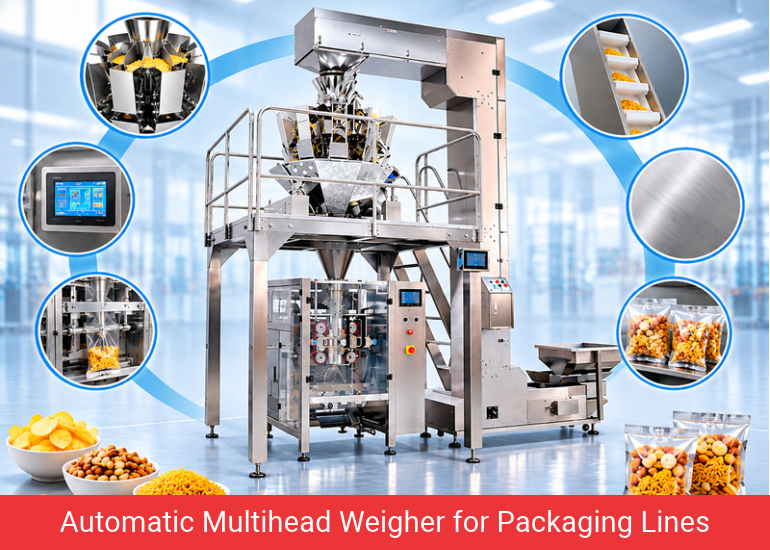
A Multihead Weigher Packing Machine uses combination weighing: it divides product between several hoppers and selects the group whose weights best meet the target. Dal passes from a central cone along vibratory feeders into pool and weigh hoppers. Fair Pack Machineries lists 10 or 14 head options with PLC programming and a touch screen HMI.
| Adjustment group | Settings | Effect on dal |
|---|---|---|
| Feeding system | Vibration strength and duration, infeed level | How much dal reaches each head |
| Weighing controls | Target weight, limits, discharge timing | Which portions are selected and when they release |
Saving these values as a recipe for each pulse, where the model supports it, can shorten changeover. After a variety change, sample portions should run before production resumes. Heads that stay empty or overloaded can point to feeding settings, while frequently rejected combinations may suggest that weighing limits or portion sizes need review.
Dal Packing Machine Accuracy: Maintaining Consistent 500 g and 1 kg Pouches
The 500 g and 1 kg packs are common retail formats, and the Fair Pack Machineries MW Series lists a 10 g to 1000 g filling band covering both. Settings should be confirmed separately for each target rather than simply doubled, using trials that verify the same points at both pack weights:
| Trial point | What to verify for both pack weights |
|---|---|
| Portion formation | Suitable hopper loading and available combinations |
| Discharge timing | Complete transfer before the sealing cycle closes |
| Feed capacity | Sufficient supply at the required pouch rate |
| Finished packs | Recorded weight checks and seal quality |
For production planning, 1 kg packs need twice the product flow of 500 g packs at the same pouch rate, which is a mass throughput calculation rather than a guarantee of achievable output. The MW Series lists 30 to 60 pouches per minute, subject to product bulk density and pack volume. Grouping runs by pack size also limits format changes.
Dal Pouch Packing Machine: Choosing Window Pouches for Premium Dal Brands
Premium brands use transparent windows so shoppers can judge grain size, colour and cleanliness before buying. A Dal Pouch Packing Machine can support this presentation, but the window also exposes any dust or oil smear on the film. On a roll film line, the window may be a clear unprinted area within printed film.
Not every window construction suits every machine. Fair Pack Machineries lists film width up to 420 mm and pouch sizes up to 300 mm by 200 mm, with custom options. For a roll film VFFS configuration, confirm film compatibility, window position and print registration requirements. If the selected packaging is supplied as premade pouches, discuss a suitable pick fill seal configuration with Fair Pack Machineries.
Automatic Dal Packing Machine: Integrating Multihead Weighers with VFFS Systems
An Automatic Dal Packing Machine line begins with bulk dal at floor level, while the weigher typically sits above the packer. Fair Pack Machineries offers a Z conveyor with cleated belts and a bucket elevator to lift product to the infeed. Its Z conveyor can start and stop from a hopper level sensor, keeping supply matched to demand.
In this automatic packing machine workflow, the conveyor supplies the weigher, which coordinates portion discharge with the VFFS machine’s forming, filling and sealing cycle. The Fair Pack multihead range lists collar forming, which shapes roll film into the pouch. Finished pouches can then transfer to downstream handling equipment, such as a flat belt conveyor.
Pulses Packaging Machine Hygiene: Keeping Filling and Sealing Areas Clean
Cleaning routines should cover feeder pans, pool and weigh hoppers, discharge chutes, the forming tube and areas around the sealing jaws, since residue at any of these points can travel toward the seal. Follow the machine manufacturer’s approved cleaning procedure, including suitable tools, cleaning agents and drying requirements. Useful inspection points include:
- After dusty pulses: powder settled in corners and around jaw faces.
- After oil coated dal: oily film on product contact surfaces.
- Before restart: dry parts, correct reassembly and clear discharge paths.
Clean jaws support reliable closures and tidy finished pouches. Between changeovers, operators should inspect hopper gates and jaw faces, then check the first pouches for seal quality and stray pieces of the previous dal. The Fair Pack Machineries bucket elevator includes a clean out door for access at its base.
Choosing the Right Dal Packing Machine for Pulse Processing Businesses
Selecting a Dal Packing Machine should begin with a product list rather than a model number. Dal mills, pulse processors and branded staples companies can obtain clearer proposals by defining these requirements early:
- Product: every variety, with its coating, dust level and size range.
- Weighing: number of heads, hopper volume and target pack weights.
- Packaging: pouch format, film specification and any window requirement.
- Output: production volume, automation level, VFFS integration and elevator height.
- Future growth: new pulses, additional SKUs and larger or smaller packs.
Fair Pack Machineries manufactures and supplies multihead weighers, VFFS machines and conveyors suited to discussions of this kind. Sharing actual dal samples, packaging film and production targets before finalising a configuration gives both buyer and supplier a realistic basis for decisions.
About Fair Pack Machineries: Multihead Weigher and Automatic Packing Machine Manufacturer
Founded in 1998 and based in Chennai, Fair Pack Machineries manufactures, exports and supplies packing machines, filling systems and conveyors for granules, powders, liquids and pastes. Its range includes multihead weigher packing machines, VFFS machines, grain and granule packing machines, pick fill seal machines and Z conveyors, supported by installation, training and maintenance services.
Pulse Packing Machine Conclusion: Matching Configuration to Every Dal
A Pulse Packing Machine is more likely to deliver dependable pouches when each stage is set for the dal being run. Plants that record settings by variety and review them at every changeover build a line that adapts as their range changes. Share representative dal samples, target pack weights, film specifications and required output with Fair Pack Machineries to discuss a suitable packing configuration.